
Royal Engineers Historical Society Battlefield Tour - Malta 2023

REHS Malta Tour 2023 |
||
|
|
|
|
Malta – A History of Conflict
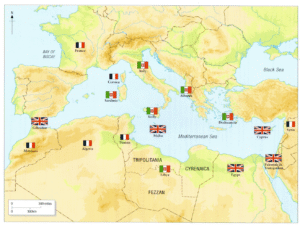
Malta measures 17.5 miles by 8.25 miles (1/4 the size of Greater London) with Gozo to the north and uninhabited islands of Comino and Filfa forms an archipelago. Despite being a popular tourist destination, Malta has a turbulent and violent past. Its location in the middle of the Mediterranean Sea has attracted civilisation and attack from a thousand years before the Great Pyramid at Giza was under construction.
5000BC – Civilised society in the Ghar Dalam caves.
3800BC – Neolithic shrines and temples built on Malta.
218-208BC – Roman forces arrive in Malta, establish a capital at Melita (Mdina/Rabat on the modern island).
60BC – St Paul shipwrecked on St Paul’s island and converted the island to Christianity.
870 – Arab invaders arrive from Sicily bringing agricultural techniques with them, as well as Islam.
1090-1127 – Norman raids on the islands.
1479 – Stability of governance following an alliance between Aragon and Castille.
1530 – Knights of the Order of St John land in the modern day Grand Harbour after being expelled from Rhodes in 1522.
1565 – The First Great Siege. Knight Grand Master Jean Parisot de la Valette defends Malta against the Turks led by Ottoman Admiral Sinan.
1798 – 1800 – French invasion. Maltese insurgency and Royal Naval blockade.
1814 – Treaty of Paris. Britain given a controlling interest in Malta.
1914-1918 – Malta used as a base to support operations in Gallipoli and Salonika.
1921 – Malta granted self-government.
1940-1942 – Third Siege of Malta.
1964 – Malta granted independence.
1974 – Malta became a republic
1979 – British forces withdraw
1993 – Malta joined the EU
Chronology – The Third Siege of Malta
Places of Interest
Fort Rinella
- The fort as a weapon system. The fort (and its twin, Fort Cambridge in Sliema) were built to defend Grand Harbour in the 1880s and are each constructed around a single Armstrong rifled muzzle-loading cannon (the 100-ton gun). There were two similar guns at Gibraltar where one is preserved in the Napier of Magdala battery. A very advanced hydraulic system was used to load and train the gun.
- The Fort also contains an excellent museum describing the life of the Victorian soldier.
- Restoration of the Guthrie Rolling Bridge at the Fort is almost complete and it will then be possible to view the only working example of a Guthrie Bridge.
- A small collection of Second World War AFVs (a Matilda infantry tank, Honey light tank and a Universal Carrier) are under restoration in the grounds of the Fort and will be available for inspection.
Notre Dame Gate
- The Gate was built as the main entrance to the Cottonera Lines (1670-1680) and in the British era served as a barracks. It was adapted as a strongpoint in the Second World War.
- Lunch on the first floor platform of the tower gives an unrivalled view of the south of the island and the Cottonera Lines.
- Adjacent to the Gate is the former Cottonera Military Hospital, a Royal Engineer-designed building.
Malta at War Museum
- The Museum is located at the Couvre Port entrance to Birgu (Vittoriosa) and an interesting example of a fortress entrance in the classical era of fortification.
- The museum includes a tour of the underground air raid shelter where the local population lived during the Blitz of Malta during the Second World War.
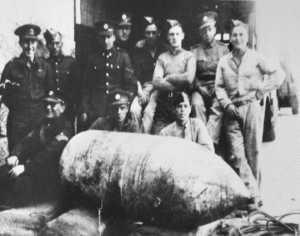
- There is a very good RE bomb disposal display in the museum.
Dockyard Creek
- The dockyard for the Knights of St John’s fleet and also a major British facility. The first dry-dock on the island can be seen, as well as stores and workshops and the British naval bakery, now the Maritime Museum (under renovation at present).
Fort St Elmo & National War Museum
- History of the Great Siege 1565.
- RE modifications to fortifications.
- Second World War – Blitz on the Grand Harbour and defeat of Italian Explosive Boat attack.
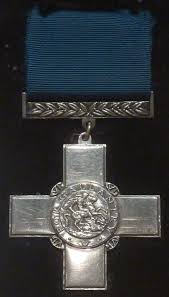
- Tour of National War Museum, including GC, Gloster Gladiator aircraft Faith.
Walk through Valletta (20 minutes) to Upper Barrakka Gardens to enter the Saluting Battery.
Saluting Battery, Lascaris War Rooms, War Headquarters
- Noon Day Gun Ceremony at Saluting Battery followed by wreath-laying at memorial to Colonel Anderson-Morshead, CRE Malta and acting governor 1829-31.
- Time Gun Museum at the Saluting Battery
- Lascaris War Rooms tour covers some of the Valletta fortifications, including a magazine, the Operation HUSKY display, the various operations rooms in the War HQ and a tour of the abandoned tunnels (not usually open to the public), demonstrating the work of the RE Tunnelling Companies.
- The Submarine Mining depot for Grand Harbour was located near the War HQ entrance and this aspect of RE work on Malta will be discussed.
NORTH OF VALLETTA
Fort Manoel
- A very fine example of an 18th century fort, but not usually open to the public.
Fort Tigné
- The last fort built by the Knights which looks towards a new style of fortification with links to Martello towers.
- Remains of the Brennan Torpedo Station (next to Fort Tigné). (The RE Museum, Chatham, has a good display on the Brennan Torpedo and Submarine Mining, which was an RE responsibility).
Pembroke (St George’s) Barracks
- 19th & 20th century barrack building by RE.
Victoria Lines – Fort Mosta or Fort Madiliena
- 19th century fort which illustrates the re-arming of the forts as artillery developed.
- The Maltese Armed Forces EOD unit who are based at the Fort.
Second World War Pill-box in Naxxar Gap
| Further Reading and Information | ||


